
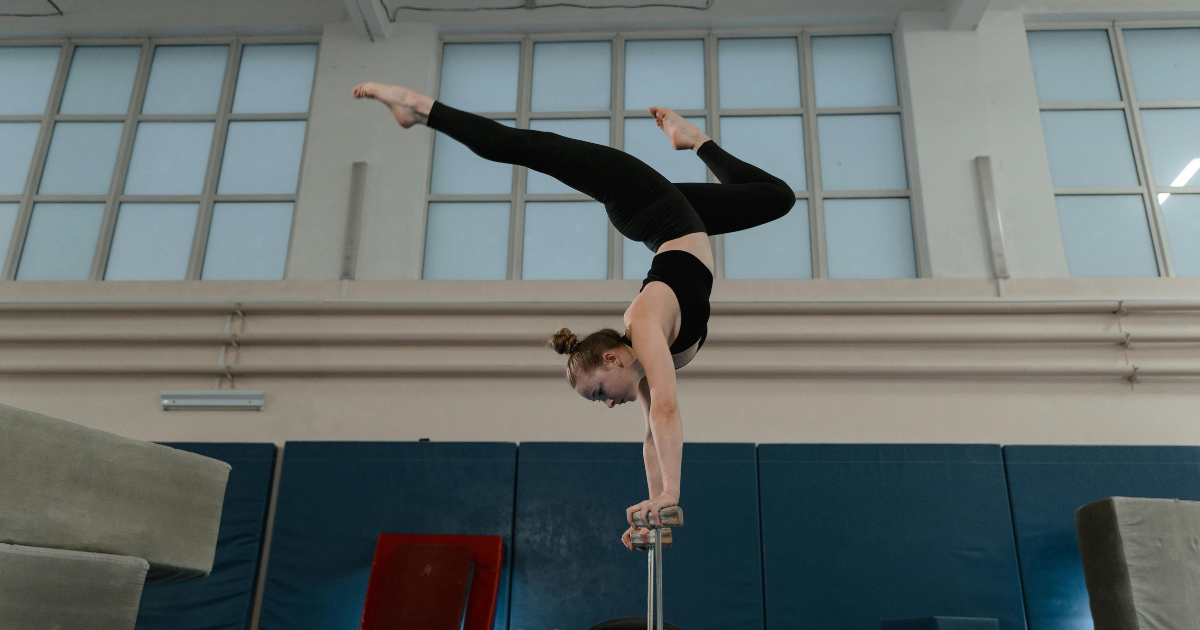
Balance beam gymnastics represents one of the most challenging and elegant disciplines in artistic gymnastics. Whether you’re a beginner learning your first balance beam skills or an aspiring gymnast preparing for competition, mastering the balance beam requires dedication, proper technique, and the right equipment.
What is Balance Beam Gymnastics?
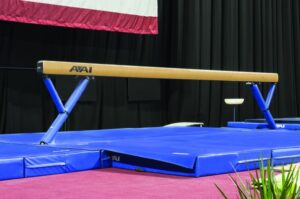
Balance beam gymnastics is a women’s artistic gymnastics event performed on a narrow beam measuring 4 inches wide and 16 feet long, elevated 4 feet off the ground. This demanding apparatus tests a gymnast’s balance, flexibility, strength, and artistic expression through a choreographed routine lasting 60-90 seconds.
The gymnastics balance beam has evolved significantly since its introduction to Olympic competition in 1952. Modern competition balance beam routines must include specific elements according to the FIG Code of Points, including jumps, turns, dance elements, and acrobatic skills.
Essential Balance Beam Skills Every Gymnast Should Master
Beginner Balance Beam Skills
Starting your balance beam gymnastics journey requires building fundamental skills on low training equipment before progressing to regulation height.
Basic Skills Include:
- Straight leg walks and relevé walks
- Straight leg kicks and passé walks
- Straight jump and tuck jump
- Pivot turns and chainé turns
- Basic poses and balances
- Simple forward and backward rolls
Intermediate Balance Beam Moves
As gymnasts develop confidence, they progress to more complex balance beam exercises:
- Split jumps and stag jumps
- Full turns and double turns
- Cartwheel and round-off
- Back walkover and front walkover
- Scale positions and arabesque holds
- Handstand holds
Advanced Competition Skills
Professional balance beam routine elements include high-difficulty acrobatic skills:
- Back handspring and back handspring series
- Aerial cartwheel and aerial walkover
- Layout stepout and front tuck
- Double full turns and ring jumps
- Complex dismount combinations
- Saltos and twisting elements
Balance Beam Equipment: Choosing the Right Apparatus
Professional Balance Beam Equipment
Competition balance beam specifications must meet FIG standards for official competitions. Professional apparatus features include:
- Regulation dimensions (4″ wide, 16′ long, 4′ high)
- Competition-grade suede surface for optimal grip
- Adjustable height mechanisms
- Stable support structure meeting safety standards
- Professional balance beam equipment pricing ranges from $3,000-$8,000
Training Balance Beam Options
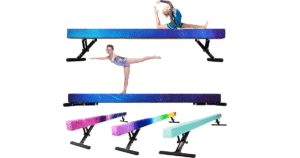
Home gymnastics balance beam equipment offers various options for different skill levels:
Low Training Balance Beam:
- Floor beam (0-6 inches high)
- Ideal for beginners learning balance beam gymnastics
- Safer environment for skill development
- Typically priced $200-$800
Sectional Balance Beam:
- Adjustable height settings
- Folding balance beam for storage convenience
- Suitable for home and gym use
- Price range: $500-$2,000
Balance Beam Safety Equipment
Proper safety equipment is essential for balance beam training:
- Balance beam mats and landing mats
- Protective mats for beneath apparatus
- Sting mats for skill training
- Balance beam combo packages including safety equipment
Balance Beam Training: Building Skills Safely
How to Do Balance Beam Gymnastics Safely
Safety should always be the top priority when learning balance beam gymnastics for beginners:
- Start Low: Begin on floor beams or low training equipment
- Proper Spotting: Always train with qualified supervision
- Progressive Skill Development: Master basics before advancing
- Adequate Matting: Use appropriate safety mats
- Proper Warm-up: Prepare body for training demands
Balance Beam Exercises for Skill Development
Effective training incorporates both on-beam and off-beam preparation:
Off-Beam Training:
- Line work on floor for balance and body position
- Conditioning exercises for core strength
- Flexibility training for required positions
- Mental preparation and visualization
On-Beam Progression:
- Basic locomotion and balance challenges
- Skill-specific training with progression
- Routine development and choreography
- Competition simulation training
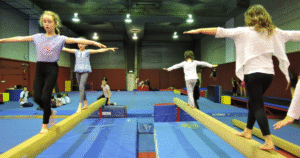
Understanding Balance Beam Scoring and Competition
Code of Points Balance Beam Requirements
Modern balance beam routines must satisfy specific composition requirements:
- Acrobatic Series: Connected flight skills or mixed series
- Turn Elements: Minimum 360-degree turn on one foot
- Jump/Leap: With 180-degree split or ring position
- Dance Elements: Showcasing flexibility and artistry
- Dismount: From the beam with appropriate difficulty
Balance Beam Difficulty Levels
Skills are rated A through H based on difficulty:
- A Skills: Basic elements (0.1 point value)
- B Skills: Low medium difficulty (0.2 points)
- C Skills: Medium difficulty (0.3 points)
- D Skills: High medium difficulty (0.4 points)
- E-H Skills: High difficulty elements (0.5-0.8 points)
Olympic Balance Beam: Champions and Memorable Moments
The Olympic balance beam has produced countless memorable performances. Recent Olympic balance beam champions have demonstrated the evolution of the sport, with athletes pushing the boundaries of difficulty while maintaining artistic excellence.
Notable Olympic balance beam achievements include perfect 10 performances from legends like Nadia Comaneci and Shannon Miller, as well as modern champions who combine exceptional difficulty with flawless execution.
Finding Balance Beam Training Near You
When searching for “balance beam gymnastics near me,” consider these factors:
- Qualified coaching staff with beam specialization
- Appropriate equipment for your skill level
- Progressive training programs
- Safety protocols and adequate matting
- Positive training environment supporting development
Professional Balance Beam Equipment Suppliers
Leading gymnastics equipment manufacturers offer various balance beam options:
- Competition Equipment: Meeting FIG specifications for elite training
- Club Equipment: Durable training apparatus for gymnastics facilities
- Home Equipment: Portable and adjustable options for personal use
- Safety Equipment: Comprehensive matting and protective gear
Conclusion: Your Balance Beam Gymnastics Journey
Balance beam gymnastics offers a unique combination of athletic challenge and artistic expression. Whether you’re beginning with basic balance beam skills or training advanced competition routines, success comes through consistent practice, proper instruction, and gradual skill progression.
Remember that mastering balance beam gymnastics takes time and patience. Start with appropriate equipment for your level, prioritize safety, and enjoy the journey of developing this beautiful and challenging gymnastic discipline.
The key to success in balance beam gymnastics lies in building a strong foundation of basic skills before progressing to more advanced elements. With dedication, proper training, and the right balance beam equipment, gymnasts can develop the confidence and ability to perform beautiful routines on this demanding apparatus.
Frequently Asked Questions About Balance Beam Gymnastics
1. What age should a child start balance beam gymnastics?
Children can begin learning basic balance beam skills as early as 3-4 years old using floor beams and low training equipment. Most gymnastics programs introduce balance beam gymnastics for beginners around ages 5-6 when children have developed sufficient coordination and following instructions. The key is starting with appropriate equipment height and focusing on fundamental balance and body awareness before progressing to elevated beams.
2. How much does professional balance beam equipment cost?
Professional balance beam equipment prices vary significantly based on quality and specifications. A competition-quality balance beam meeting FIG standards typically costs $3,000-$8,000. For home training, a basic training balance beam ranges from $200-$800, while adjustable sectional balance beams cost $500-$2,000. Remember to budget for essential balance beam safety mats, which add $300-$1,000 to your total investment.
3. What’s the difference between a training beam and competition beam?
A competition balance beam must meet strict FIG specifications: 4 inches wide, 16 feet long, positioned 4 feet high with regulation suede surface. Training balance beams offer more flexibility in height adjustment (often 6 inches to full height), may use different surface materials, and often feature sectional design for portability. Training beams prioritize safety and skill development, while competition beams focus on regulation specifications and performance consistency.
4. How long does it take to learn basic balance beam skills?
Learning fundamental balance beam gymnastics skills typically takes 3-6 months of consistent training for most beginners. Basic skills like straight walks, kicks, and simple jumps can be mastered in weeks, while more complex elements like cartwheels and back walkovers may require several months. Progression depends on individual factors including age, previous gymnastics experience, training frequency, and natural coordination abilities.
5. Is balance beam gymnastics safe for beginners?
Balance beam gymnastics can be very safe when proper safety protocols are followed. Beginners should always start on floor beams or low training equipment, use appropriate balance beam mats underneath, and train under qualified supervision. The risk of injury significantly increases when safety guidelines are ignored or when gymnasts attempt skills beyond their current ability level. Proper progression and adequate matting make balance beam training relatively safe for most participants.